
The Dangers of Ammonia in Chicken Coops and How to Detect It Early Before It Becomes Fatal
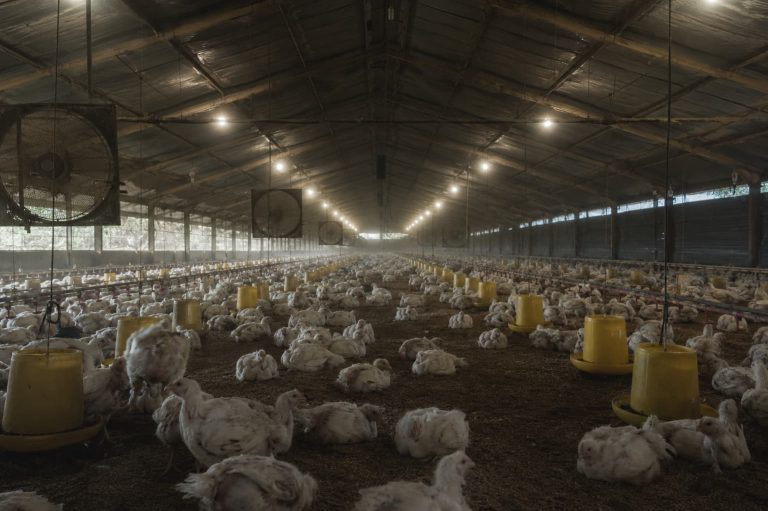
The pungent odor that hits you the moment you open the coop door is often dismissed as just the “typical farm smell.” Many farmers, especially those who have worked in coops for years, have even become desensitized to the smell because their noses have adapted. But behind that “normal” smell lies ammonia gas, whose concentration can be far higher than realized, and whose impact on chickens is far more serious than just an unpleasant odor.
Ammonia is one of the most frequently underestimated poultry house air quality issues precisely because of its “subtle” nature—unlike temperature, which can be felt directly through the skin, or stocking density, which is clearly visible, ammonia levels can only be accurately determined through measurement. Without adequate measuring equipment, farmers can only rely on their sense of smell, which, unfortunately, is inaccurate and tends to adapt to consistent exposure.
This article will explore in depth why ammonia poses a serious threat to the productivity and health of broiler chickens, how severe the impact can be if left unmanaged, and how IoT-based ammonia sensors help farmers detect this problem long before it reaches hazardous levels.
Where Does Ammonia in Chicken Coops Come From, and Why Can Its Levels Spike Dramatically
Ammonia in chicken coops is formed through the breakdown of uric acid and organic matter in chicken droppings by bacteria. This process occurs continuously while the chickens are in the coop, and its intensity is influenced by several factors: litter moisture, coop temperature, stocking density, and, most crucially, air circulation or ventilation.
In coops with good ventilation, the ammonia produced is continuously expelled through air circulation, keeping concentrations at low levels. However, in enclosed coops with inadequate ventilation—whether due to poor coop design, malfunctioning exhaust fans, or improper curtain settings—ammonia will continue to accumulate without sufficient means of escape.
Research shows that these extreme conditions are not merely theoretical. Enclosed barns without proper ventilation have been recorded to have ammonia levels as high as 57,270 ppm—a figure far above the safe threshold and already in the category that can be lethal within a short period of time. What makes this situation dangerous is how quickly it can happen—even a minor malfunction in the ventilation system or a sudden change in weather that causes the curtains to close tighter than usual is enough to trigger a spike in ammonia levels within hours.
The Effects of High Ammonia Levels on Chicken Health and Productivity
The effects of ammonia on broiler chickens are gradual and cumulative, ranging from mild irritation to permanent damage if exposure is prolonged. At relatively low levels—yet still above the safe threshold—ammonia begins to irritate the mucous membranes of the chickens’ respiratory tract. This irritation causes the chickens to experience chronic discomfort, leading to a reduced appetite—a direct consequence that results in slowed growth and a worsened FCR.
At higher levels, ammonia can damage the cilia (tiny hairs) in the chickens’ respiratory tract, which serve as a natural defense mechanism against pathogens. When the cilia are damaged, the chickens become far more susceptible to respiratory tract infections, including diseases such as Chronic Respiratory Disease (CRD), which commonly affects broilers in environments with poor air quality. This damage is cumulative, meaning that the longer chickens are exposed to high levels of ammonia, the more difficult it is for their respiratory tracts to return to normal even after exposure has ceased.
At critical levels, such as those documented in the study above, the impact can manifest immediately as mass mortality within a short period. The combination of severe irritation, respiratory tissue damage, and extreme physiological stress renders the chickens unable to survive under such conditions. On a more moderate but still dangerous scale, the impact takes the form of a consistent increase in daily mortality—a pattern often misinterpreted as a “seasonal disease” when it is actually rooted in persistently poor house air quality.
Why Ammonia Is Often Overlooked in Day-to-Day Barn Management
There are several reasons why ammonia often does not receive the same level of attention as temperature or stocking density in farmers’ daily management practices. First, as mentioned earlier, ammonia cannot be accurately measured by the sense of smell alone. The human nose undergoes olfactory adaptation—a decrease in sensitivity to odors that are constantly present—so farmers who spend long periods in the house actually become less sensitive to rising ammonia levels than people who have just entered the house.
Second, the early symptoms of ammonia’s effects on chickens—a slight decrease in appetite and a slight slowdown in growth—are very similar to the symptoms of various other issues, such as suboptimal feed quality or less-than-ideal temperatures. Without concrete data on ammonia levels, farmers often misdiagnose the actual cause and take corrective actions that miss the mark.
Third, ammonia levels can fluctuate quite rapidly depending on weather conditions and ventilation activity, so spot measurements with portable manual devices—while useful—do not capture the full picture of trends. Ammonia levels that are within safe limits in the morning can spike significantly at night when curtains are closed to maintain temperature—a trade-off between keeping the barn warm and ensuring adequate air circulation that farmers often overlook.
How IoT-Based Ammonia Sensors Are Changing the Way Farmers Manage Air Quality
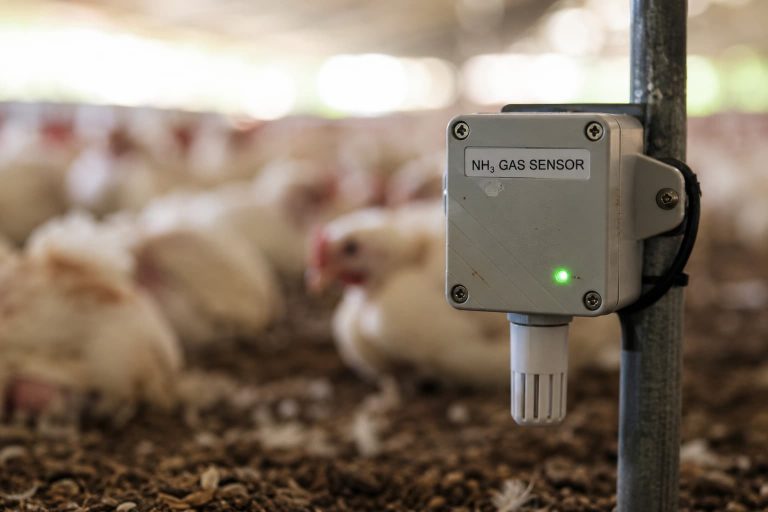
IoT-based ammonia sensors address all of the above limitations by providing objective, continuous, and automated measurements. Instead of relying on smell or occasional manual measurements, sensors permanently installed in the coop continuously monitor ammonia levels and send automatic alerts as soon as levels approach dangerous thresholds.
Ammonia sensors should ideally be placed at the same height as the chickens’ heads, not on the floor or near the coop ceiling. This placement is crucial because ammonia produced from litter tends to concentrate near the floor surface, while chickens breathe air at the height of their own heads. Measurements taken at non-representative heights can provide a misleading picture—either too low or too high compared to the actual conditions the chickens are breathing.
A well-designed system will be configured with two alert thresholds: an early warning at a level of approximately 10 ppm to signal that ammonia levels are beginning to rise and additional ventilation is needed, and a critical warning at a level of approximately 25 ppm, indicating that conditions have become sufficiently hazardous and require immediate action. With these two threshold levels, farmers have time to respond gradually, rather than being notified only when conditions have already reached a critical point.
What truly sets this approach apart from manual monitoring is the speed of response it enables. As soon as the sensor detects ammonia approaching the warning threshold, a notification is immediately sent to the farmer’s smartphone, and in systems integrated with ventilation equipment, exhaust fans can be activated automatically or remotely without waiting for the farmer to arrive on-site. It is this speed of response that makes the difference between successfully managing ammonia before it harms the chickens and ammonia that has already caused damage before anyone realizes it.
Integration of Ammonia Monitoring with Automated Feeding
A study published on ResearchGate in 2021 regarding an IoT-based system for air quality monitoring and automated chicken feeding showed that an integrated approach combining air quality monitoring and feed management yields better results than separate approaches. The logic is quite clear: high ammonia levels reduce the chickens’ appetite, so if the feeding system is not adjusted to these conditions, the feed left in the feeders will be wasted or become an additional source of contamination.
With an integrated system, farmers can observe a direct correlation between fluctuations in ammonia levels and daily feed consumption patterns. If it is found that feed intake decreases during the same period as an increase in ammonia levels, this is a strong indication that the main problem lies not in the quality of the feed itself, but in the house air conditions that are causing the chickens to lose their appetite. An accurate diagnosis like this is only possible if data from various parameters are collected and analyzed together, rather than viewed in isolation.
Practical Strategies for Controlling Ammonia in Broiler Houses
In addition to installing sensors, several management practices must be implemented alongside monitoring to effectively control ammonia.
Litter management is the cornerstone. Litter that is too wet—due to leaking waterers or high house humidity—will significantly accelerate ammonia production. Regularly replacing or adding dry litter, especially in areas that frequently get wet—such as around waterers—helps suppress the rate of ammonia production at its source.
Consistent ventilation management is also crucial, especially during weather transitions—such as shifts from hot days to cold nights—when farmers tend to close the curtains more tightly to maintain warmth but inadvertently reduce the air circulation needed to remove ammonia. This is where data from temperature and ammonia sensors need to be considered together—the decision to close the curtains to maintain temperature should not be made without considering its impact on air circulation and ammonia levels.
Maintaining stocking density within standard limits also helps reduce the rate of ammonia accumulation, because the more chickens there are in the same space, the higher the volume of manure produced per square meter, which ultimately accelerates ammonia production beyond the available ventilation capacity.
Case Study: An Ammonia Spike Detected Before It Became a Crisis
A 6,000-bird broiler house in North Sumatra experienced an incident that nearly turned into a major crisis during the current production cycle. One night during the rainy season, the farm operator closed all the curtains to keep rainwater out and maintain a warm temperature—a reasonable decision, but one that inadvertently blocked nearly all of the farm’s air circulation pathways.
The ammonia sensors installed in the farm detected a rapid rise in ammonia levels about three hours after the curtains were closed, exceeding the initial warning threshold. An automatic notification was sent to the farmer’s smartphone while he was at home. Since this alert was received before ammonia levels reached a critical threshold, the farmer immediately contacted the barn operator to open some of the curtains and activate additional exhaust fans; although the risk of rainwater entering remained, it was now much smaller and more manageable.
By the next morning, ammonia levels had returned to safe levels, and no significant increase in mortality was observed in that barn. The farmer realized that without this monitoring system, this situation likely would not have been detected until the morning when manual checks were conducted—a delay that, based on data regarding the extreme ammonia levels that can occur in enclosed barns, could have potentially caused far greater losses.
FAQ: Questions About Ammonia and Poultry House Air Quality

What is the safe limit for ammonia levels in broiler chicken houses? In general, ammonia levels below 10 ppm are considered relatively safe, while levels above 25 ppm are classified as critical and require immediate action. Long-term exposure, even at levels above the safe threshold but not yet critical, still has a negative impact on the respiratory health and productivity of the chickens.

Does a strong odor in the house always mean that ammonia levels are dangerous? The two are not always linearly correlated, as the human sense of smell adapts to continuous exposure. Conversely, ammonia levels that are actually quite high may sometimes not be clearly detected by someone who has been in the house for a long time. Measurements using sensors provide far more objective data than relying on smell.

What is the relationship between ammonia and broiler chicken’s FCR? High ammonia levels cause respiratory tract irritation, which reduces the chicken’s appetite, resulting in suboptimal feed intake relative to their growth. Additionally, chickens stressed by high ammonia levels are more susceptible to illness, which ultimately further worsens the overall FCR.

Do ammonia sensors need to be calibrated periodically? Yes, gas sensors generally require periodic calibration to ensure reading accuracy is maintained, especially since humid and dusty house conditions can affect sensor performance over time. Most providers of modern IoT systems already offer calibration guidelines or services as part of their after-sales support.

How can ammonia production be reduced without sacrificing a warm house temperature? The key is controlled ventilation, not shutting off ventilation entirely. Using a minimum ventilation system that maintains basic air circulation even when the curtains are mostly closed, combined with adequate heating, allows the temperature to be maintained without significantly compromising air quality.

Conclusion: Controlling What Is Invisible and Not Always Detectable by Smell
The danger of ammonia in chicken coops lies in the fact that it is difficult to detect intuitively, even though its impact on the health and productivity of chickens is very real and can be fatal if left unchecked. Relying solely on the sense of smell or visual inspections is no longer sufficient to effectively manage this risk, especially given the increasingly large and densely populated scale of modern poultry houses.
IoT-based ammonia sensors give farmers the ability to see what was previously invisible—an additional layer of safety that works continuously and tirelessly, even when no one is on duty in the poultry house. For farmers who want to ensure that barn air quality is maintained throughout the production cycle, an integrated monitoring system like the one developed by BAKU can serve as a significant layer of protection against risks that have often gone unnoticed. If you’d like to discuss your barn’s air quality monitoring needs, don’t hesitate to consult with a team that understands the operational context of livestock farming in Indonesia.
Daftar Referensi
  1. ResearchGate. (2021). IoT-Based Air Quality Monitoring and Chicken Feeding Automation System. researchgate.net
  2. ResearchGate. (2024). An IoT-Based Temperature and Humidity Monitoring System for Broiler Chicken Coops to Improve Production. researchgate.net
  3. Chickin.id. (2024). Standards and Methods for Calculating Broiler Chicken FCR. chickin.id/blog
  4. Proceedings of the SATI National Seminar. (2025). Design of an IoT System for Controlling Broiler Chicken House Temperature to Improve Productivity Using the Mamdani Fuzzy Method. ojs.unkriswina.ac.id
Scroll to top
× Whatssapp Us