
Manual Monitoring vs. IoT: Which Is Truly More Cost-Effective for Broiler Farmers?
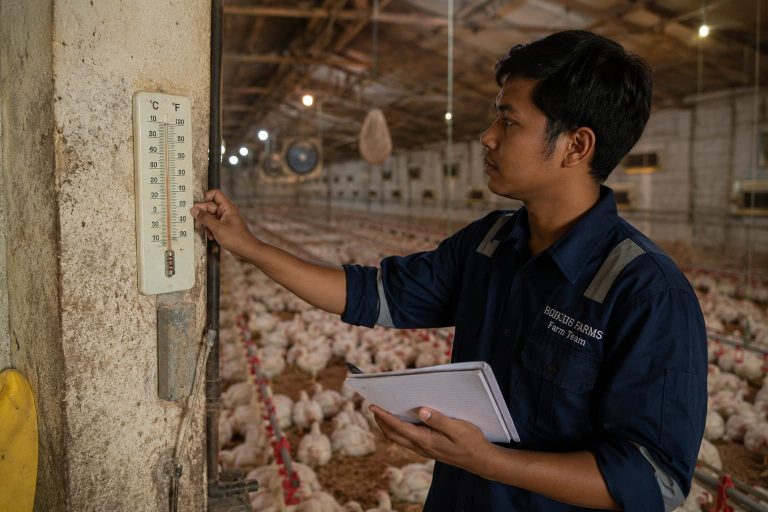
Uncovering the Hidden Costs Behind Manual Monitoring
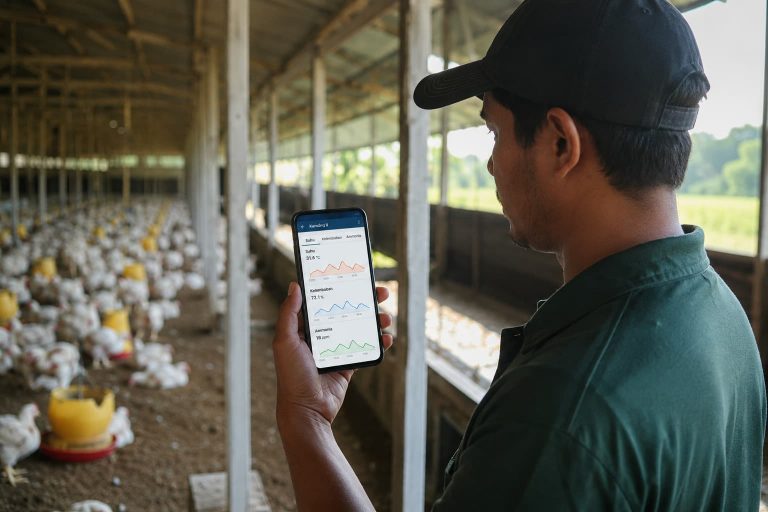
Calculating the Financial Impact of Delayed Detection
The Cost Structure of IoT Monitoring Investments You Need to Understand
Comparing Total Cost of Ownership Over the Long Term
Practical Considerations for Farmers Considering a Transition
Case Study: A Comparison of the Performance of Two Poultry Houses with Different Monitoring Approaches
FAQ: Questions About Comparing Manual Monitoring and IoT
Is manual monitoring completely ineffective? Manual monitoring still has value, especially for visual checks that cannot be replaced by sensors, such as the physical condition of the chickens or the overall cleanliness of the coop. However, for rapidly changing environmental parameters such as temperature and ammonia levels, manual monitoring has significant limitations in terms of monitoring frequency and response speed compared to automated systems.
How long does it typically take for an IoT sensor investment to pay for itself (break even)? The break-even period varies depending on the scale of the coop and the severity of previously encountered issues; however, in general, the savings from improved FCR and reduced mortality over the first few cycles are significant enough to begin covering the initial investment costs, especially for coops that previously frequently experienced issues related to temperature or ammonia that were not detected in a timely manner.
Should small-scale farmers with a single farm still consider an IoT investment? Yes, although the benefits may be smaller compared to farmers with multiple farms, small-scale farmers can still derive significant benefits from early detection and the prevention of recurring losses, especially if the capital invested in day-old chicks (DOC) and feed per cycle is substantial relative to the scale of their operation.
Does an IoT system replace the need for labor in the house? No. An IoT system serves as a tool that improves the quality and speed of monitoring; it does not entirely replace the role of human labor. House operators are still needed for physical tasks such as manual feeding when necessary, house sanitation, and corrective actions requiring physical presence based on alerts received from the system.
How can you start an IoT investment with limited capital? The most realistic approach is to start with the most critical parameters—based on a history of frequently encountered problems, such as temperature or ammonia levels—in a single pilot barn first. Once the benefits are proven and understood, the investment can be gradually expanded to other barns or additional parameters according to financial capacity.
Conclusion: Comparing Visible Costs with Hidden Costs
References
- Journal of Animal Husbandry, UIN Sultan Syarif Kasim Riau. (2024). Evaluation of Broiler Chicken Farming under the Core-Satellite Partnership System Based on the Performance Index (IP). ejournal.uin-suska.ac.id
- Proceedings of the SATI National Seminar. (2025). Design of an IoT System for Controlling Broiler Chicken House Temperature to Improve Productivity Using the Mamdani Fuzzy Method. ojs.unkriswina.ac.id
- MALCOM: Indonesian Journal of Machine Learning and Computer Science. (2025). Internet of Things-Based Automation of Temperature and Humidity Control in Broiler Chicken Houses. journal.irpi.or.id
- ResearchGate. (2024). IoT-Based Temperature and Humidity Monitoring System in Broiler Chicken Houses to Increase Production. researchgate.net