
Bird Flu Still Looms Over Indonesian Chicken Farms: Understanding the Risks and Building Modern Biosecurity
News of mass poultry deaths in a region always triggers the same concern among farmers: Is this bird flu again? This question is natural given Indonesia’s long history with this disease since it was first reported in poultry in 2004. What farmers need to understand is that avian influenza (AI) is not merely a threat from the past that has been resolved—this virus, particularly the H5N1 subtype, remains endemic in Indonesia to this day, and other subtypes, such as H9N2, continue to be detected and spread across various regions.
Understanding the current status of avian influenza in Indonesia is important not to create panic, but to foster proportionate vigilance and implement targeted preventive measures. This disease is indeed different from those discussed previously, such as coccidiosis or CRD, due to its far greater potential impact—both in terms of potentially very high poultry mortality rates and its zoonotic potential, which can affect human health.
This article discusses the latest facts regarding the status of avian influenza in Indonesia, the symptoms that poultry farmers need to recognize, and how modern biosecurity practices—including the role of IoT-based poultry house monitoring—can help strengthen farms’ defenses against this disease threat.
Current Status of Avian Influenza in Indonesia: What Poultry Farmers Need to Know
Highly Pathogenic Avian Influenza (HPAI) subtype H5N1 remains an endemic virus in Indonesia, one of several countries worldwide with endemic status for this virus. This endemic status means the virus continues to circulate within the poultry population—including both wild and domestic birds—with the potential for new outbreaks to occur at any time, particularly under conditions of weak biosecurity.
In addition to H5N1, the H9N2 subtype—which falls under the category of Low Pathogenic Avian Influenza (LPAI)—continues to be detected and reported as spreading across various provinces in Indonesia, including Java, Sumatra, Kalimantan, Sulawesi, and Bali, based on positive samples identified through PCR testing and DNA sequencing. Although H9N2 generally causes a lower mortality rate than H5N1, this virus remains a significant concern due to its widespread circulation and the potential for genetic mutations that may occur over time.
It is important for poultry farmers to understand that both H5 and H9 are types of influenza viruses capable of infecting not only poultry but, in certain cases, humans as well—although human cases generally result from direct contact with infected poultry or contaminated environments, not from the consumption of properly cooked chicken meat. Indonesian health authorities, including the Ministry of Health, continue to monitor these strains as part of their commitment to global health surveillance.
Recognizing Avian Influenza Symptoms in Poultry to Watch Out For
Symptoms of avian influenza in poultry vary depending on the pathogenicity of the infecting virus. In cases of HPAI such as H5N1, symptoms are generally very severe and develop rapidly. Infected poultry may die suddenly without any observable clinical symptoms—a characteristic that makes HPAI particularly dangerous, as early detection is extremely difficult based solely on visual observation.
In poultry that show symptoms before death, commonly observed signs include blue combs and wattles due to impaired blood circulation, difficulty breathing, swelling of the head, and a drastic drop in egg production in laying hens. The mortality rate from HPAI H5N1 can reach extremely high percentages in infected populations; in certain cases, it approaches 100 percent among affected flocks, making it one of the poultry diseases with the most extreme mortality rates known in the poultry industry.
In LPAI infections, such as most cases of H9N2, the clinical symptoms that appear are generally milder, including depression or reduced activity, moderate respiratory distress, and a decline in egg production; however, the mortality rate is much lower than that of HPAI. Nevertheless, LPAI still warrants vigilance because prolonged circulation of the virus has the potential to lead to mutations that could increase its virulence.
Why Live Poultry Markets and Interaction with Wild Birds Are Major Risk Factors
Understanding the transmission routes of avian influenza is crucial for poultry farmers to identify key risk points in their operations. Wild waterfowl, such as ducks and various types of migratory birds, serve as natural reservoirs for various subtypes of avian influenza viruses, including H9N2. The migration of these waterfowl plays a significant role in the spread of the virus across vast geographic regions, creating complex control challenges because the source of transmission does not always originate from domestic poultry that can be directly controlled by farmers.
Live poultry markets represent a significant risk point because they serve as gathering places for various types and sources of poultry under high-density conditions, creating an ideal environment for the exchange of genetic material among different influenza viruses—a process known as reassortment. This process has the potential to produce new viral strains with characteristics different from those of their parent viruses, including the possibility of strains with altered levels of transmissibility or virulence.
For commercial farmers with closed-house systems, the risk of direct contact with wild birds or live poultry markets is indeed relatively more controlled compared to backyard flocks or open-system farms. However, the risk of indirect contamination remains, for example, through contact with vehicles, equipment, or personnel who have previously interacted with high-risk environments such as poultry markets or other infected farms.
Why Biosecurity Remains the Most Fundamental Line of Defense
Given that avian influenza viruses are endemic and continue to circulate in the environment, vaccination alone is not sufficient as the sole prevention strategy. Indonesia has indeed implemented an avian influenza (AI) vaccination program for poultry as one of its control measures, given that total culling has become less effective in situations where the virus is already endemic, as is the case in Indonesia. However, vaccination has its limitations, including the possibility that vaccinated poultry may still carry the virus without showing symptoms of illness—which can actually become a hidden source of transmission if not balanced by strict biosecurity practices.
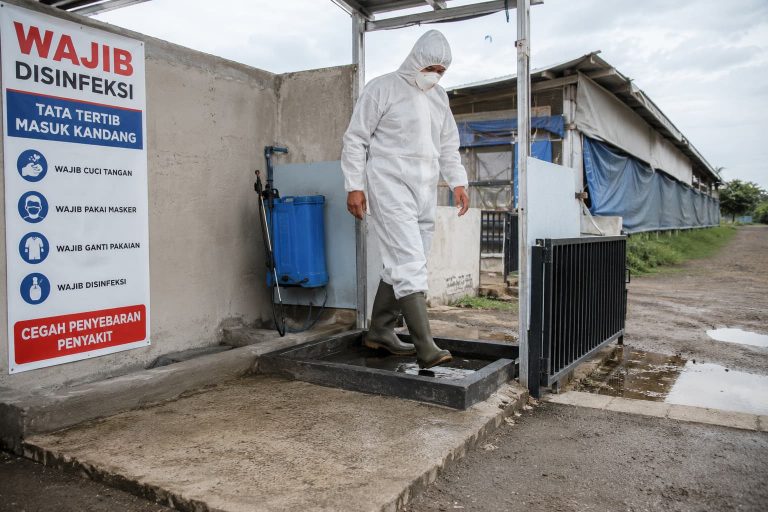
Biosecurity—which refers to a series of practices designed to prevent the entry and spread of pathogens within a poultry farm environment—remains the most fundamental line of defense against avian influenza and various other poultry diseases. Basic biosecurity practices include restricting access by people and vehicles to the coop area, consistently disinfecting equipment and vehicles entering the farm, clearly separating “clean” and “dirty” areas in the farm layout, and strictly managing contact with external poultry or wild birds near the farm.
What farmers often fail to realize is that biosecurity is not merely a matter of physical procedures, but also a matter of consistency and discipline in its daily implementation. A single minor violation of biosecurity protocols—such as a vehicle not being properly disinfected or personnel failing to change their clothing before entering the poultry house—is enough to create an opening for dangerous pathogens, including the avian influenza virus, to enter.
The Role of IoT-Based Poultry House Monitoring in Supporting Modern Biosecurity

Although IoT-based monitoring does not directly prevent the entry of avian influenza viruses in the same way that physical biosecurity protocols do, this system plays a crucial supporting role in strengthening a farm’s overall disease defense strategy, including aiding in the early detection of anomalies that may indicate serious health issues.
Given that one of the characteristics of highly pathogenic avian influenza (HPAI) is sudden death—which is sometimes not accompanied by clinically observable symptoms—real-time monitoring of water and feed consumption serves as a critical indicator that can provide early warning signals. A very drastic and sudden drop in water or feed consumption—far beyond the normal range of variation—can be an early sign of a serious health issue requiring immediate investigation, including the possibility of a dangerous viral infection.
In addition, a well-documented monitoring system also supports record-keeping and traceability—which are essential components of a modern biosecurity system. Historical data on barn conditions, including visit logs, changes in environmental parameters, and chicken health patterns, can provide valuable information should an investigation into potential sources of health issues be required—including in scenarios that necessitate coordination with local animal health authorities.
It is important to emphasize that IoT monitoring serves as a supporting layer within a comprehensive biosecurity system, not as a substitute for physical biosecurity protocols, which remain the primary foundation of prevention. The combination of strict biosecurity protocols and early detection capabilities through data monitoring creates a more layered and responsive defense system than relying on either approach alone.
Practical Biosecurity Measures That Farmers Must Consistently Implement
In addition to environmental monitoring, several fundamental biosecurity measures must be consistently implemented by both broiler and layer farmers to strengthen defenses against avian influenza and various other poultry diseases.
Access restrictions are a crucial basic measure. Only personnel with genuine operational needs should be allowed to enter the housing area, and everyone entering should undergo disinfection procedures and change into special clothing or footwear before entering the housing zone.
Vehicles and equipment entering the farm area must also be disinfected consistently, as vehicles that have previously visited other farms or poultry markets can unknowingly serve as vectors for contamination. A clear separation between the poultry house zone and other areas on the farm, including feed storage and offices, helps minimize the risk of cross-contamination.
Controlling wild birds and migratory birds around the farm area—for example, by installing protective netting or managing the environment to make it unattractive to wild birds—also helps reduce the risk of indirect contact with natural virus reservoirs. A vaccination program implemented in accordance with animal health authority recommendations, combined with routine surveillance—including sampling for testing—complements a comprehensive prevention strategy.
The Importance of Coordination with Animal Health Authorities
For livestock farmers who suspect symptoms indicative of avian influenza, the appropriate course of action is to immediately report the situation and coordinate with local livestock and animal health authorities, rather than concealing or ignoring these symptoms. Given that avian influenza is a zoonotic virus with the potential to impact human health, early detection and response involving relevant authorities are crucial—both to protect the health of livestock and humans and to prevent further spread to other nearby farms.
Effective coordination with animal health authorities also helps farmers obtain up-to-date information on the risk status in their area, including information on potential outbreaks in neighboring regions that require vigilance, as well as the latest guidelines on biosecurity protocols and recommended vaccinations based on the current epidemiological situation.
FAQ: Questions About Avian Influenza and Poultry Farm Biosecurity

Is avian influenza still a real threat to poultry farms in Indonesia today? Yes. The H5N1 virus remains endemic in Indonesia, and the H9N2 subtype continues to be detected and is spreading across various provinces. Although human cases are relatively rare compared to the size of the poultry population, the risk of an outbreak in poultry remains real, especially on farms with weak biosecurity measures.

Is properly cooked chicken safe to eat even if avian influenza is present in a certain area? Chicken that is properly cooked at an adequate temperature is safe to eat, as the cooking process inactivates the avian influenza virus. The risk of transmission to humans generally occurs through direct contact with infected live poultry or contaminated environments, not through the consumption of properly processed poultry products.

What is the main difference between HPAI and LPAI? HPAI (Highly Pathogenic Avian Influenza), such as H5N1, causes extremely high mortality rates in infected poultry and spreads rapidly. LPAI (Low Pathogenic Avian Influenza), such as most cases of H9N2, generally causes milder symptoms with a much lower mortality rate, but still has the potential to mutate into a more dangerous form if it circulates for a long time.

Is AI vaccination in poultry sufficient without strict biosecurity measures? No. Vaccination helps reduce the severity of infection in vaccinated poultry, but vaccinated birds can still carry the virus without showing signs of illness. Strict biosecurity remains a fundamental line of defense that cannot be fully replaced by vaccination alone.

What should poultry farmers do if they suspect a case of avian influenza in their flock? Farmers should immediately report the suspicion and coordinate with local livestock and animal health authorities to ensure proper handling and investigation. Reporting suspected cases early helps prevent further spread and ensures that response measures comply with applicable animal health protocols.

Conclusion: Proportional Vigilance Through Layered Biosecurity
Avian influenza remains a real threat to Indonesia’s poultry industry given its endemic status, which has persisted for more than two decades; however, this threat can be effectively managed through a combination of consistent biosecurity measures, vaccination in accordance with animal health authority recommendations, and support for farm monitoring that aids in the early detection of livestock health anomalies. Proportional vigilance—not excessive panic—is the most appropriate approach for farmers to sustainably address this risk.
IoT-based monitoring systems, while not a substitute for physical biosecurity protocols, provide an additional layer of defense by enabling faster detection of livestock health anomalies through real-time monitoring of water and feed consumption, as well as environmental conditions within the farm. BAKU supports Indonesian poultry farmers in building a more layered farm defense system through monitoring technology integrated with modern farm management practices. If you’d like to discuss how to strengthen your biosecurity and farm monitoring systems, the BAKU team is ready to serve as a discussion partner who understands the context of poultry health risks in Indonesia.
List of References
  1. ResearchGate. (2021). IoT-Based Air Quality Monitoring and Chicken Feeding Automation System. researchgate.net
  2. ResearchGate. (2024). IoT-Based Temperature and Humidity Monitoring System in Broiler Chicken Coops to Increase Production. researchgate.net
  3. Indonesian Ministry of Health. (2024–2026). Remain Vigilant Against the Risk of Avian Flu Transmission to Humans. kemkes.go.id
  4. Buleleng Regency General Hospital. (2026). Understanding the Influenza Virus in Indonesia. rsud.bulelengkab.go.id
  5. Airlangga University. (2025). Avian Influenza in Indonesia. unair.ac.id
  6. Sudarnika, E., et al. (2026). District-level joint risk assessment of highly pathogenic avian influenza H5N1 at the human–animal–environment interface in live bird markets in Bogor, Indonesia. Veterinary World, 19(1), 210–223.
  7. World Health Organization (WHO). (2024). Cumulative data on human cases of H5N1 avian influenza.
Scroll to top
× Whatssapp Us